
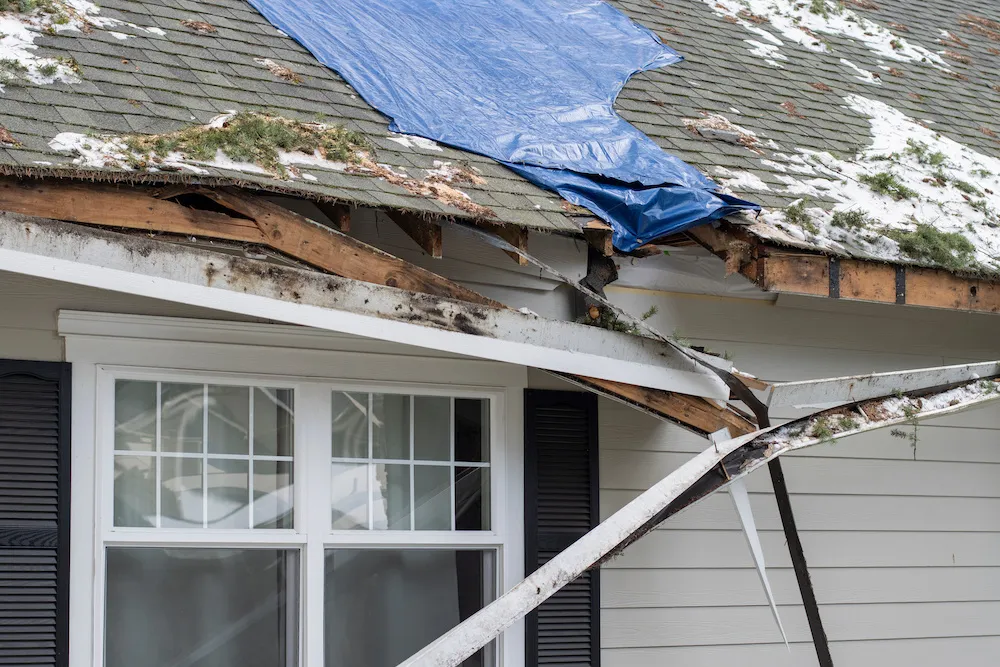
When a major storm rolls through, your roof is often the first line of defense, and the first part of your home to take a hit. High winds, heavy rain, hail and falling debris can all cause serious damage that isn’t always obvious from the ground. Acting quickly after a storm is critical to preventing further issues like leaks, mold and structural deterioration.
If you’re facing potential damage, here’s what you need to know about storm damage roof repair and how to handle the process with confidence.
What to Do After Roof Storm Damage
Step 1: Assess the Damage Safely
Your safety comes first. Never climb onto your roof immediately after a storm as surfaces may be slick, unstable or structurally compromised.
Instead, start with a ground-level inspection and look for:
- Missing or lifted shingles
- Dents from hail impact
- Fallen tree limbs
- Damaged flashing or gutters
- Water stains on ceilings or walls inside your home
If you notice active leaks, use tarps or buckets indoors to minimize water damage while you arrange professional repairs.
Step 2: Document Everything
Before making temporary fixes or filing a claim, document the damage thoroughly:
- Take clear photos and videos from multiple angles
- Photograph interior water damage
- Save any fallen shingles or debris
This documentation is essential for insurance purposes and helps streamline your storm damage roof repair claim process.
Step 3: Contact Your Insurance Company
Most homeowners’ insurance policies cover storm-related roof damage. Contact your provider as soon as possible to:
- Report the damage
- Review your coverage details
- Schedule an adjuster inspection
A professional roofing contractor can often meet with the adjuster to ensure all damage is properly identified and included in the claim.
Step 4: Schedule a Professional Roof Inspection
Even if the damage appears minor, hidden issues can worsen over time. A licensed roofing contractor will:
- Perform a full inspection
- Identify structural or underlayment damage
- Check flashing, vents and sealing points
- Provide a detailed repair or replacement estimate
Catching problems early prevents costly repairs down the line.
Step 5: Make Temporary Repairs if Needed
If there’s a delay between inspection and full repairs, temporary solutions may be necessary to protect your home, such as:
- Emergency tarping
- Sealing exposed areas
- Removing debris
These short-term measures help prevent water intrusion until permanent repairs can be completed.
Step 6: Complete the Repairs or Replacement
Depending on the severity of the storm, your contractor may recommend:
- Spot repairs for isolated shingle damage
- Partial roof replacement
- Full roof replacement if structural integrity is compromised
Using high-quality materials and proper installation techniques ensures your roof is prepared for future storms.
Why Professional Storm Damage Roof Repair Matters
DIY roof fixes can be dangerous and may void warranties or insurance claims. Professional contractors bring:
- Safety expertise
- Proper equipment
- Insurance claim assistance
- Warranty-backed workmanship
- Long-term protection for your home
When it comes to storm damage, fast and professional action can mean the difference between a simple repair and a full roof replacement.
Protect Your Home with BA Exteriors
Storm damage doesn’t have to turn into long-term stress. At BA Exteriors, our experienced team provides thorough inspections, detailed documentation and reliable storm damage roof repair services to restore your home quickly and safely.
If your home has recently experienced severe weather, don’t wait. Contact BA Exteriors today for a professional inspection and expert guidance on your next steps.